Primary Role
Damp gross swing
Use during early and mid-stage transport while the load is still moving over distance.
Layer 3 · Application Article · PSC Hand Safety
A steel plate that swings or rotates during crane transport is displaying normal physical behaviour — not a rigging failure. This article covers the correct engineering response at each phase.
Managing Swing During Transport
A steel plate suspended from a crane hook behaves as a pendulum. Any lateral force — crane travel, wind, uneven pickup — introduces swing that persists until damped.
Any rotational disturbance — wind on the plate's face, uneven tension release, or incidental contact — introduces rotation that continues with very little resistance. Neither behaviour is a malfunction; both require a controlled engineering response.
Taglines are the correct engineering control for swing management during the early and mid-stages of a crane lift. A tagline at full length keeps the operator well clear of the plate's swing arc while providing enough directional force to damp the pendulum motion and maintain orientation.
The tagline is not a fine positioning tool. Its long lever arm and tension-based control make it suitable for gross swing and orientation management — not for the precise final corrections that close-approach positioning requires.
Use during early and mid-stage transport while the load is still moving over distance.
Full tagline length keeps the operator away from the plate's swing arc.
Long-lever, tension-based control is too coarse for the final precise approach.
Managing Rotation
Rotation is the behaviour that most directly benefits from a magnetic push-pull tool, because rotation requires a control point on the load's surface.
A tagline, attached to a rigging point rather than the plate's surface, provides limited rotational control at close range.
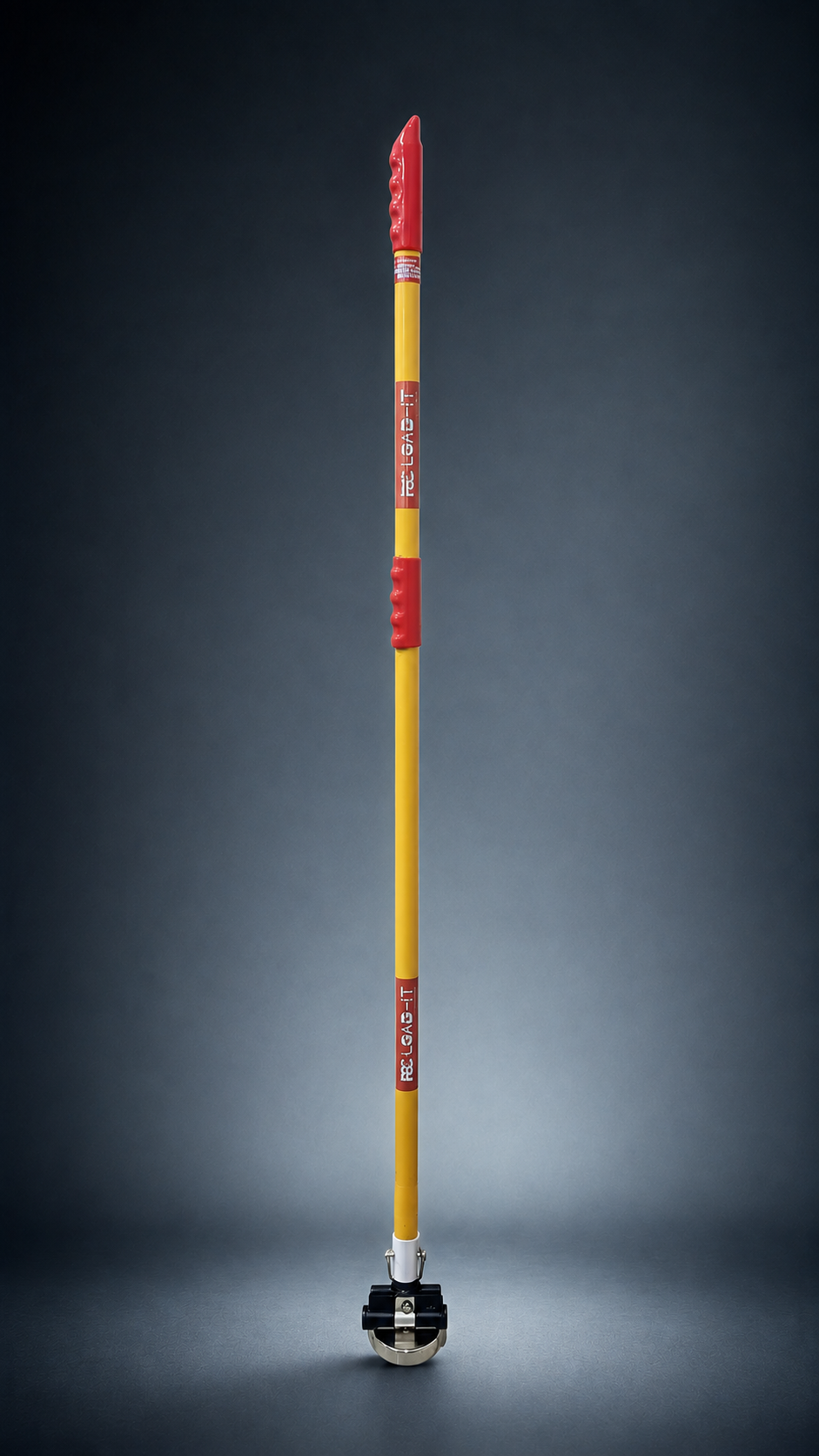
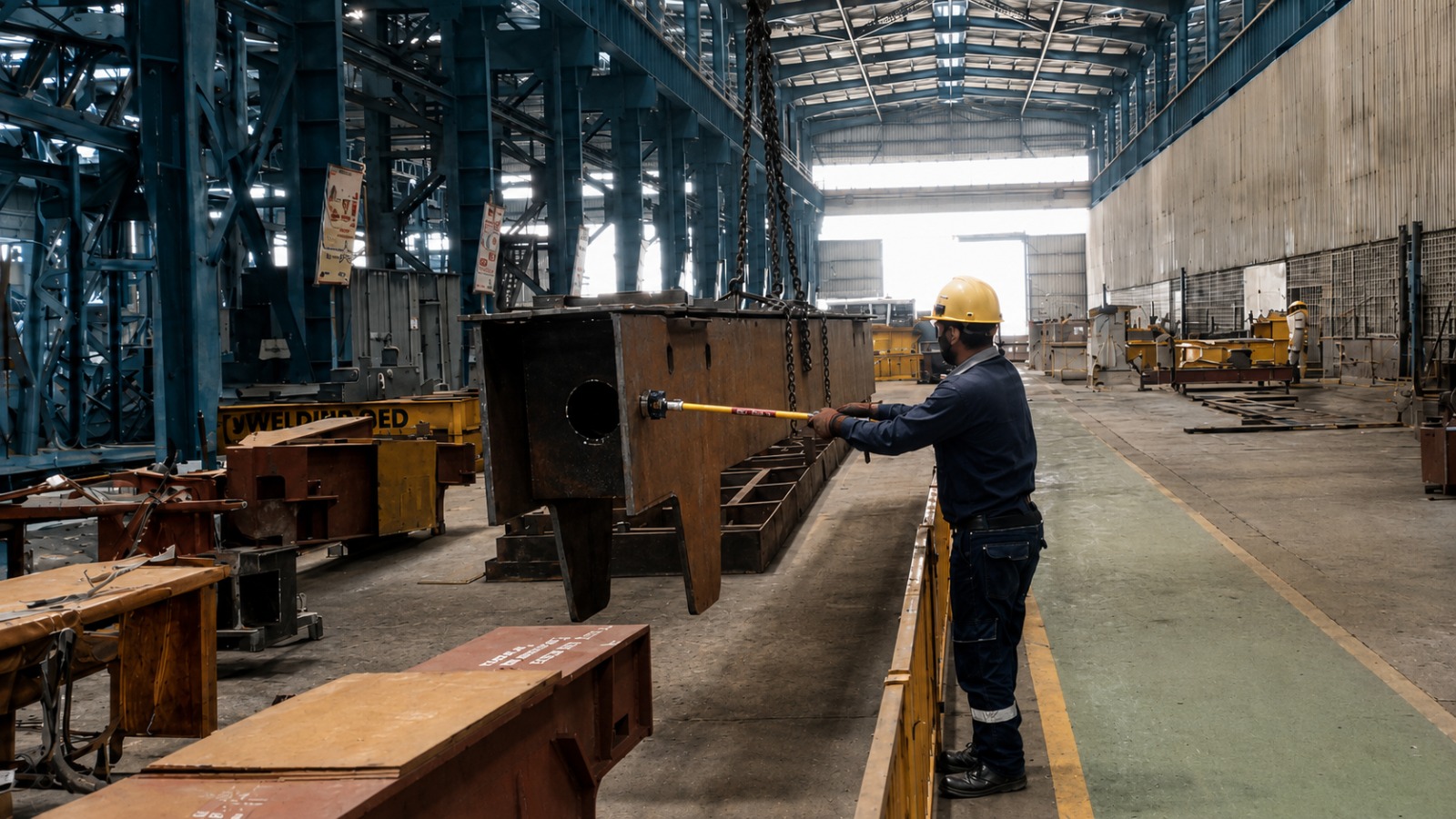
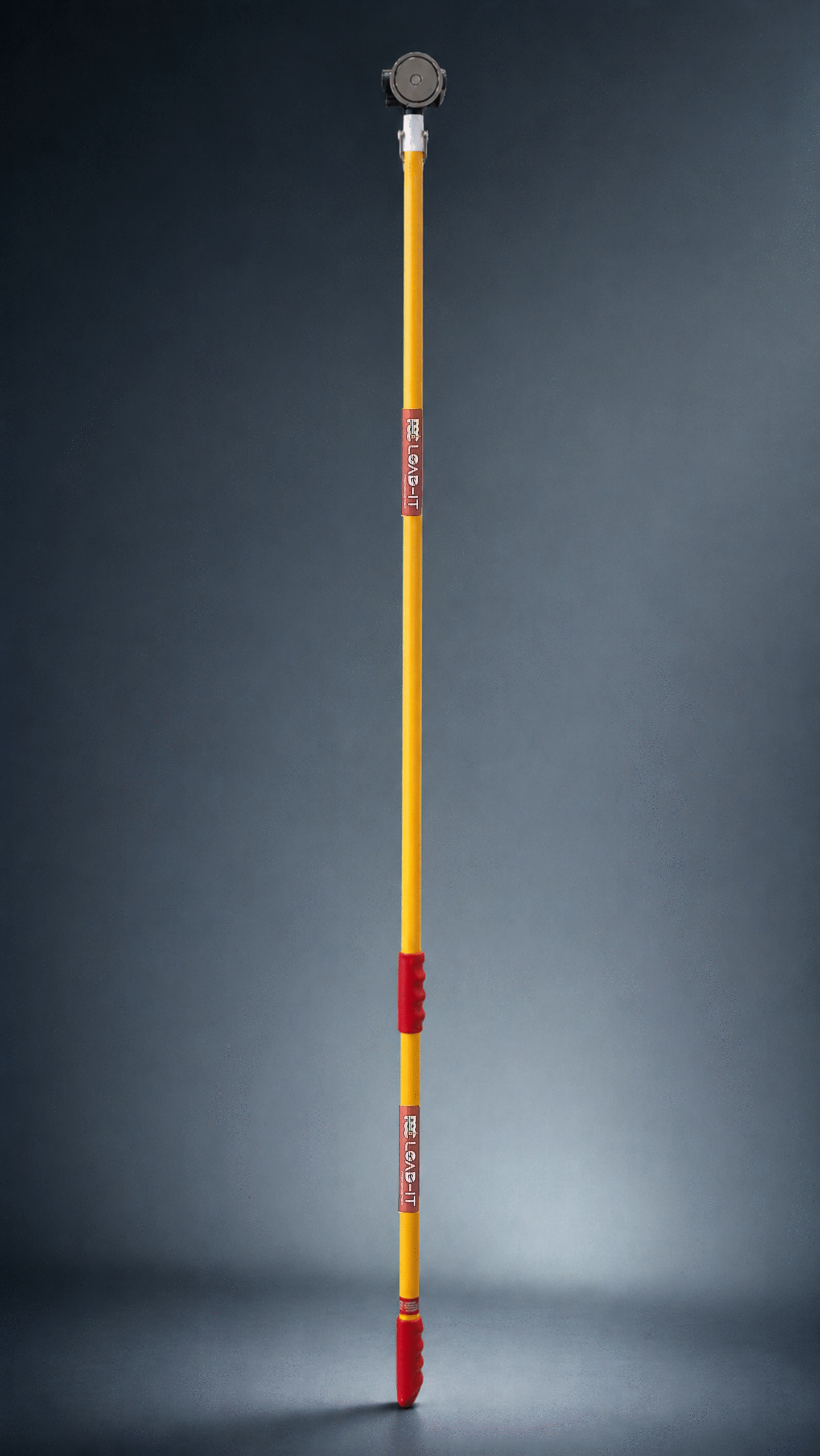
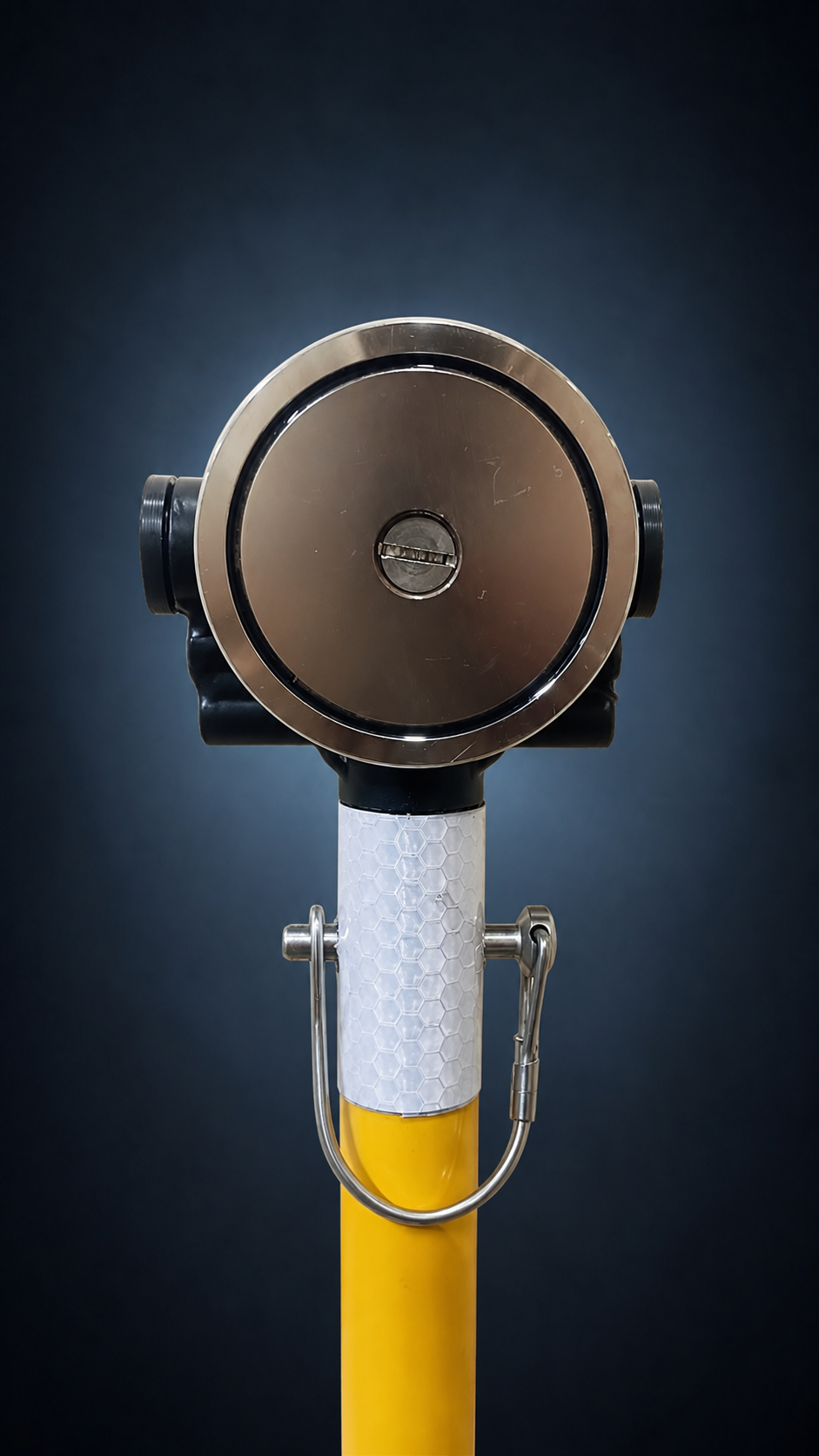
A magnetic push-pull tool engaged on the plate's flat face provides a repositionable rotational control point. As the operator applies lateral force offset from the plate's centre of gravity, the resulting moment turns the plate.
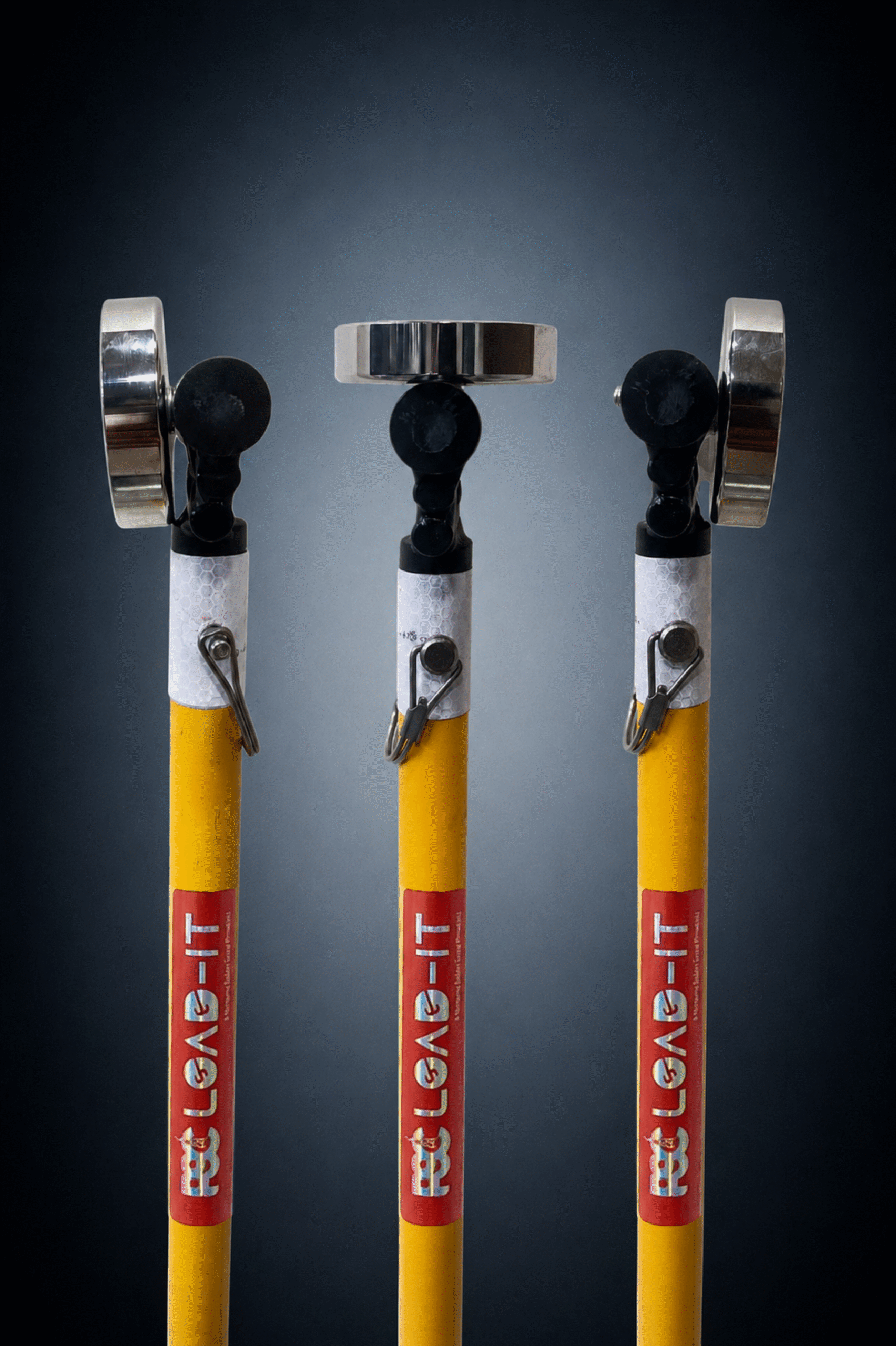
The 180° Swivel Head allows the operator to maintain attachment as the plate's orientation changes and as the operator's own position adjusts to track the rotation.
Supports changing plate orientation while maintaining a repositionable magnetic control point on the load surface.
The Handoff From Tagline to Magnetic Tool
In a well-sequenced operation, the tagline manages the plate during transport. As the plate approaches its final position, the magnetic tool operator engages the tool and takes over for fine correction and final positioning.
The two tools address different problems at different phases — they are complementary, not competing.
Magnetic tool engagement should happen before the plate enters its final approach, not after it has already drifted past the target.
Engaging the tool with the plate still at manageable distance gives the operator time to assess attachment quality and establish control before the critical closing phase.
Manage gross swing and orientation while preserving operator distance.
Take over for fine correction, rotational control and final positioning.
Do not attempt to use a magnetic push-pull tool to damp gross swing from a distance — the tool is designed for fine positioning. Allow taglines to reduce swing to manageable levels before transitioning to magnetic tool guidance.
Related Engineering Resources
Review the MagHead system, selection logic, magnetic-force engineering and the wider hands-free ferrous-load guidance framework.
Premium Engineering Consultation
PSC's Application Mapping Review examines the actual task — the load, the surface, the access conditions, and the operator's movement — and recommends the correct matched configuration.